

AI Opportunity and Workflow ROI Diagnostic
Tool budgets fail when teams choose software before identifying the workflow that deserves investment. This article gives founders, CEOs, SME owners, investors, and board teams a practical AI opportunity diagnostic for GCC and MENA businesses. It shows how to rank workflow opportunities by economic pain, data readiness, ownership, controls, and measurable ROI before procurement begins. Readers get a pass/fail gate, an interactive scorecard, investor-facing evidence criteria, common failure modes, and a 4-6 week ownership plan. Use it to find the three workflow opportunities most likely to reduce delays, rework, leakage, or decision risk without creating scattered pilots or diligence surprises in the next quarter.
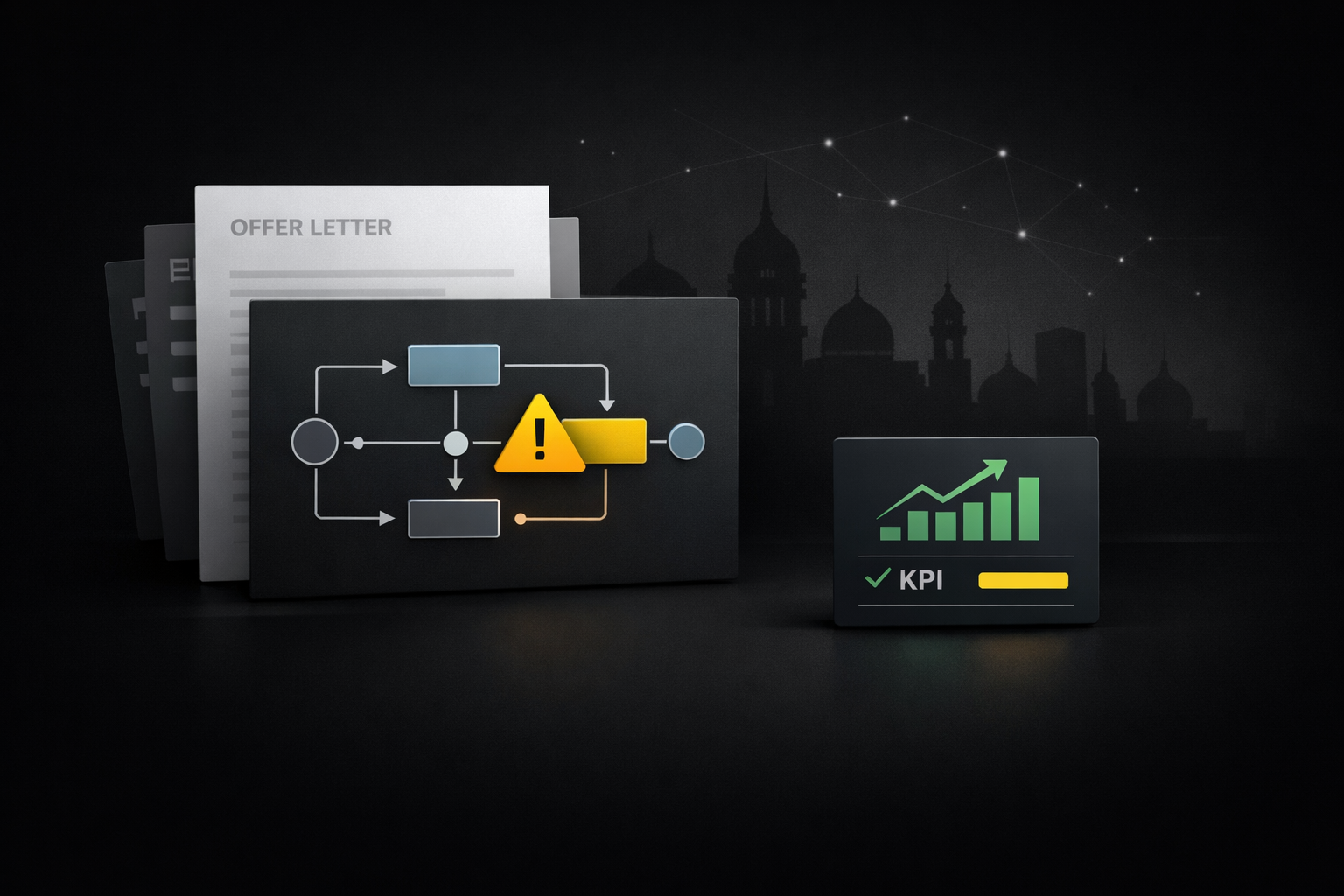
Fix Process Before Hiring: The Operational Lever Investors Notice
Many founders hire to fix chaos: delayed approvals, rework loops, tribal knowledge, and numbers that do not reconcile. The result is more payroll and more expensive chaos. This post shows how to pull the operational lever first: document the few workflows that create value, clarify decision rights, measure the bottleneck, and automate repeatable handoffs so execution becomes predictable. You will learn what sophisticated investors test first, a pass/fail checklist, an interactive readiness scorecard, and a practical 6-8 week plan with owners. Use it to decide whether to hire now or remove the constraint that makes hiring feel necessary in the first place.
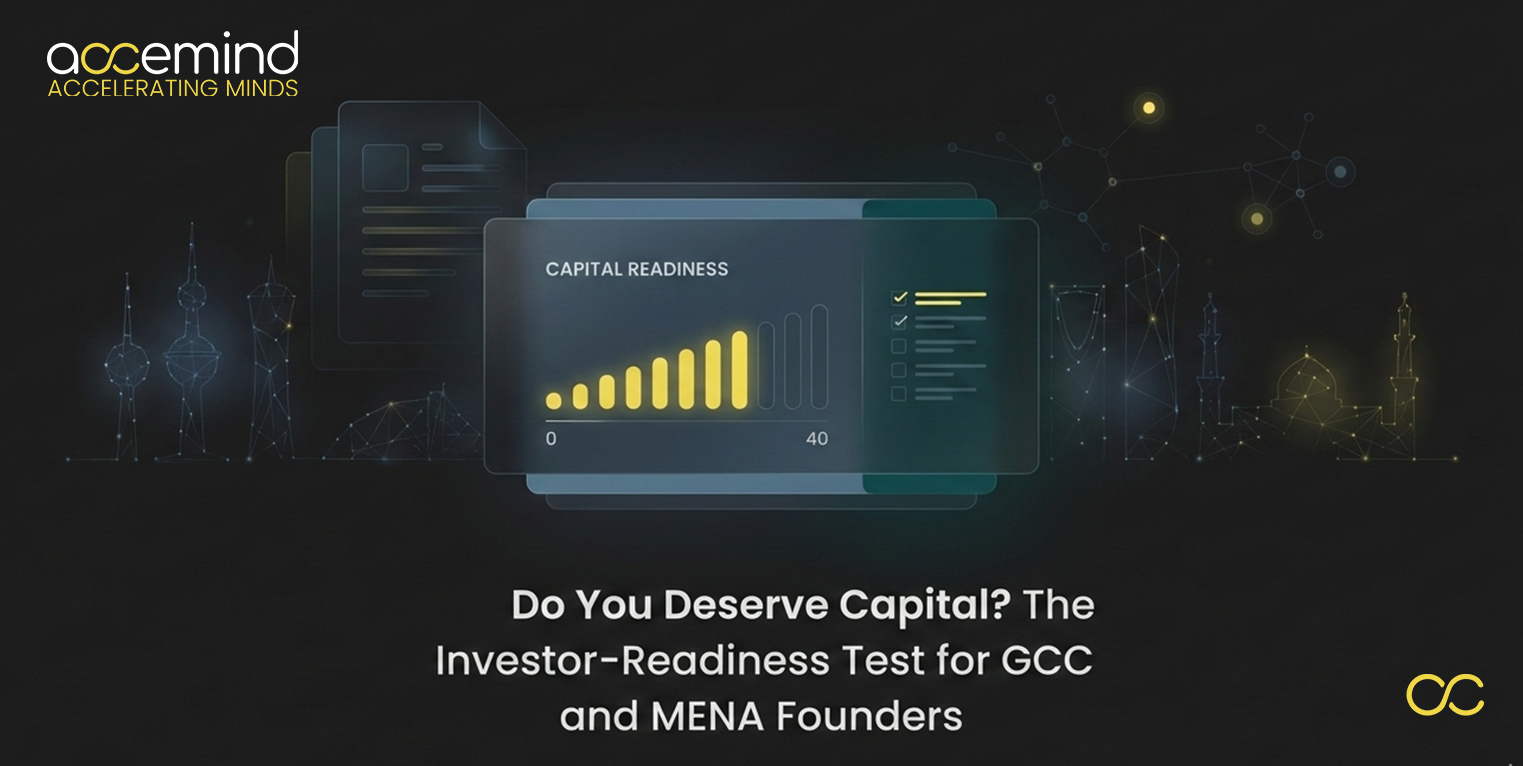
Do You Deserve Capital? The Investor-Readiness Test
Most founders ask whether they can raise capital. Institutional investors ask a different question: does your company deserve capital right now? In GCC and MENA processes, the answer is decided by evidence, controls, and execution capacity, not by a polished pitch. This post gives you a boardroom-grade investor readiness test with a pass/fail gate, an interactive scorecard, and a 10-week implementation plan with ownership. It also highlights what sophisticated investors test first: cash truth, unit economics, governance, and cap table hygiene. Use it to reduce diligence delays, prevent valuation haircuts, and decide whether to start outreach now or run a focused readiness sprint first.
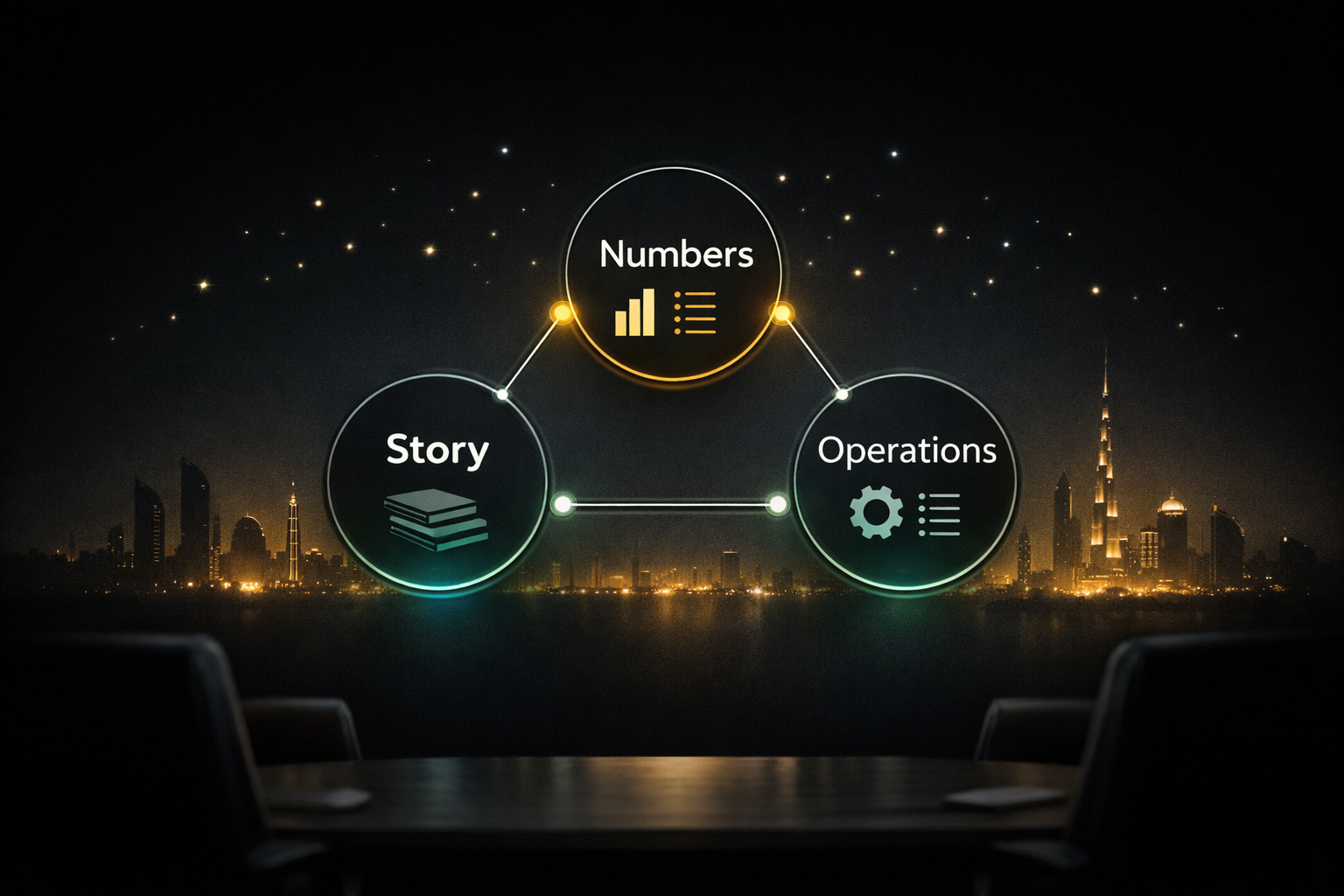
How to Align Story, Numbers and Operations Before a Raise
Most raises do not stall because the deck is weak. They stall when diligence uncovers misalignment: a narrative that cannot be backed by numbers, numbers that do not reconcile to cash, or an operating model that cannot execute the forecast. This post shows GCC and MENA founders how to align story, numbers, and operations before investors lean in. You will get a pass/fail gate, a readiness scorecard, and a six to ten week execution plan with clear owners. Use it to reduce diligence delays, avoid valuation haircuts, and keep your team focused on delivery while you prepare for a capital raise or institutional process.
Investor-Grade Leadership and Culture: What Boards Look For
Boards and serious investors do not diligence culture through slogans. They test it through decision rights, accountability, leadership depth, and the operating rhythm that turns strategy into results. This guide explains what boards look for in investor-grade leadership and culture across GCC and MENA, with a practical pass/fail framework, a readiness scorecard, and a 90-day implementation plan. Use it to reduce key-person risk, prevent diligence surprises, and avoid valuation haircuts before a capital raise, partial exit, or institutional partnership. The focus is evidence: what goes in the data room, how governance meetings should run, and which failure modes stall deals.